Home / Blog / Buying Guides
Buying Guides
The Best Pellet Grills and Smokers for Effortless Wood-Fired BBQ
The best pellet grill overall is the Weber Searwood 600, combining true 600°F high-heat searing with effortless grease-and-ash cleanup and reliable app controls. For beginners prioritizing intuitive smart-app smoking, the Traeger Woodridge Pro leads the pack, while the Pit Boss 850 DX offers the best value under $600.
Pellet grills have transformed backyard barbecue by pairing real hardwood smoke with push-button digital temperature precision. Using an automated auger to feed compressed hardwood pellets into a firepot, a quality pellet smoker holds steady low-and-slow temperatures for 12-hour briskets—and the best modern designs finally get hot enough to sear steaks and burgers properly.
Whether you are buying your first smoker or upgrading to a heavy-gauge competition rig, these are the best pellet grills worth your money. Prefer tending a live fire? See the best charcoal grills.
Quick Comparison: The Best Pellet Grills
- Rank 1
Best Overall
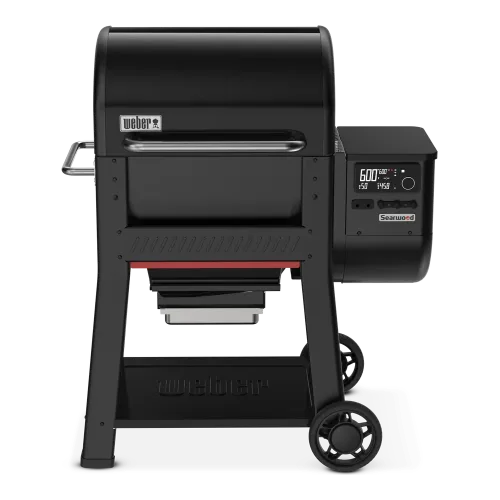
Weber Searwood 600
- Cooking Area
- 648 sq. in.
- Temp Range
- 180°F–600°F
- Hopper Capacity
- 20 lbs
- Rank 2
Best for Beginners
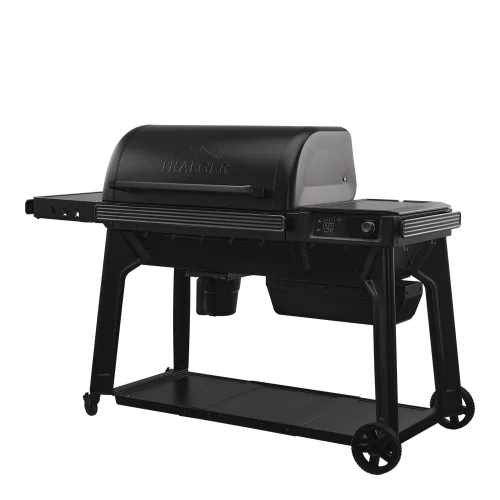
Traeger Woodridge Pro
- Cooking Area
- 970 sq. in.
- Temp Range
- 165°F–500°F
- Hopper Capacity
- 24 lbs
- Rank 3
Best Budget
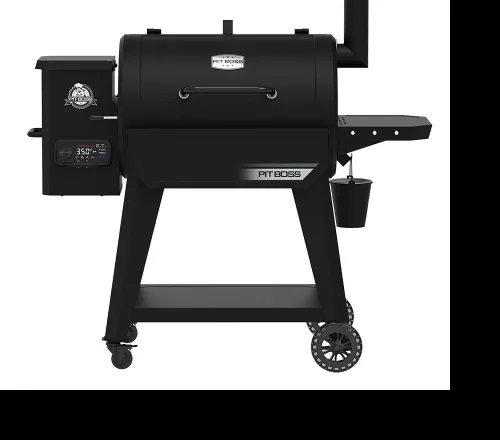
Pit Boss 850 DX
- Cooking Area
- 850 sq. in.
- Temp Range
- 180°F–500°F
- Hopper Capacity
- 20 lbs
- Rank 4
Best Smoke Flavor
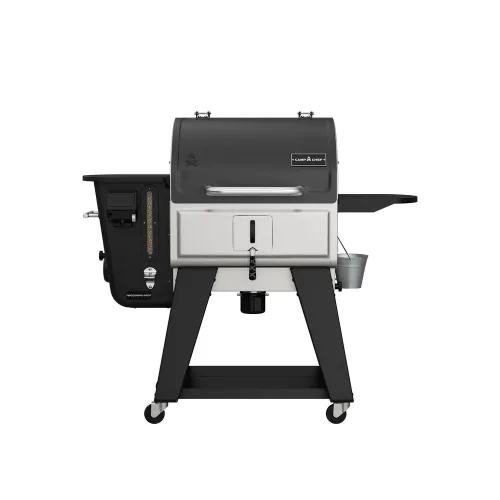
Camp Chef Woodwind Pro 24
- Cooking Area
- 811 sq. in.
- Temp Range
- 160°F–500°F
- Hopper Capacity
- 22 lbs
- Rank 5
Best Heavy-Duty / Splurge
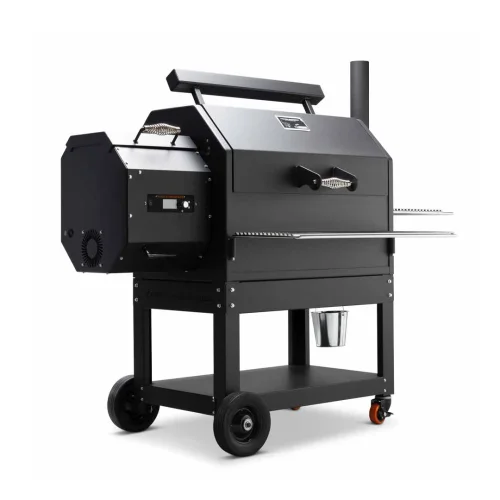
Yoder Smokers YS640s
- Cooking Area
- 1,070 sq. in.
- Temp Range
- 150°F–600°F+
- Hopper Capacity
- 20 lbs
1. Best Overall: Weber Searwood 600
- Price: Check Current Price on Amazon
- Cooking Area: 648 sq. in. (420 sq. in. primary + 228 sq. in. upper rack)
- Temperature Range: 180°F–600°F
- Hopper Capacity: 20 lbs (with quick-dump chute)
The Verdict: The Weber Searwood 600 solves the biggest weakness of traditional pellet grills—weak searing—while introducing a simplified grease-and-ash drawer that makes cleanup painless.
Replacing Weber's earlier SmokeFire line, the Searwood completely re-engineers the internal heat diffuser and grease management system. It climbs rapidly to 600°F, producing legitimate grill marks and a crisp crust on steaks and burgers without requiring sear-plate attachments. For low-and-slow cooks, the SmokeBoost mode hovers around 180°F to maximize blue-smoke production on ribs and pork shoulder.
Pros
- Reaches a true 600°F for high-heat searing alongside low-and-slow smoking
- Pull-out grease and ash tray eliminates vacuuming after every cook
- Responsive Weber Connect Wi-Fi/Bluetooth app and rapid heat recovery
Cons
- Front and side prep shelves are sold separately
- 20-pound hopper is slightly smaller than competing XL models
2. Best for Beginners: Traeger Woodridge Pro
- Price: Check Current Price on Amazon
- Cooking Area: 970 sq. in.
- Temperature Range: 165°F–500°F
- Hopper Capacity: 24 lbs
The Verdict: If you want the smoothest learning curve in backyard smoking, the Traeger Woodridge Pro pairs an intuitive digital controller and industry-leading mobile app with nearly 1,000 square inches of cooking space.
Traeger’s WiFIRE app remains the gold standard for remote monitoring—letting you adjust pit temperatures, activate Super Smoke mode, and check pellet levels from anywhere. Cleanup is equally beginner-friendly thanks to Traeger's EZ-Clean Grease & Ash Keg, which collects all drippings and spent ash in a single removable bucket beneath the barrel.
Pros
- Best-in-class Wi-Fi app reliability and step-by-step guided recipes
- Generous 970 sq. in. capacity fits multiple racks of ribs or briskets
- EZ-Clean keg simplifies post-cook ash and grease disposal
Cons
- Tops out at 500°F—great for roasting and smoking, but not a dedicated steak searer
3. Best Budget Pellet Grill: Pit Boss 850 DX
- Price: Check Current Price on Amazon
- Cooking Area: 850 sq. in.
- Temperature Range: 180°F–500°F
- Hopper Capacity: 20 lbs
The Verdict: The Pit Boss 850 DX delivers heavy-gauge steel construction, 850 square inches of porcelain-coated cast-iron grates, and direct-flame broiler access for hundreds less than rival brands.
Its signature feature is the Flame Broiler Lever—a sliding heat deflector plate that opens directly over the firepot so you can sear burgers or reverse-sear steaks over an open wood flame. While its temperature swings are slightly wider than higher-priced PID controllers, it holds steady enough for tender pulled pork, ribs, and weeknight chicken at an unbeatable price.
Pros
- Exceptional value with 850 sq. in. of heavy cast-iron grate space
- Sliding flame-broiler plate exposes food to direct fire for searing
- Includes solid front and side prep shelves out of the box
Cons
- Temperature fluctuations are slightly wider than premium PID models
- Cleaning out the firepot requires removing the grates and heat deflector
4. Best for Authentic Smoke Flavor: Camp Chef Woodwind Pro 24
- Price: Check Current Price on Amazon
- Cooking Area: 811 sq. in.
- Temperature Range: 160°F–500°F
- Hopper Capacity: 22 lbs
The Verdict: The biggest complaint from offset-smoker purists is that pellet grills produce milder smoke flavor. The Camp Chef Woodwind Pro 24 solves that problem with an integrated Smoke Box that burns real wood chunks, charcoal briquettes, or wood chips directly over the firepot.
You load a handful of hickory or post-oak chunks into the stainless drawer, pull the damper handle to ignite them with the pellet burner, and enjoy deep, offset-style bark and smoke ring formation—all while the digital PID controller maintains rock-solid temperatures automatically.
Pros
- Dedicated Smoke Box lets you burn real wood chunks and charcoal for authentic BBQ bark
- Ash cleanout cup empties spent pellet ash with the pull of a lever
- Compatible with Camp Chef’s modular Sidekick sear burner and flat-top attachments
Cons
- You need to reload wood chunks every 45–60 minutes during the early stages of a cook
- Base unit lacks direct open-flame searing without the Sidekick add-on
5. Best Heavy-Duty Splurge: Yoder Smokers YS640s
- Price: Check Current Price on Amazon
- Cooking Area: 1,070 sq. in.
- Temperature Range: 150°F–600°F+
- Weight: ~335 lbs
The Verdict: Built in the USA from 10-gauge (1/8-inch thick) structural steel, the Yoder Smokers YS640s is a "buy-once, cry-once" competition-grade cooker engineered to last decades.
Where mass-market pellet grills lose heat in cold or windy weather, the YS640s’s thick steel body holds temperatures like a vault. Pairing a ceramic ignition system with an adaptive Wi-Fi controller and a two-piece heat diffuser, it shifts effortlessly from 225°F overnight brisket smoking to 600°F+ direct-flame grilling over the firepot.
Pros
- Tank-like 10-gauge American steel construction resists wind and winter cold
- Removable diffuser door unlocks true direct-flame searing
- Precision adaptive controller and ceramic igniter built for heavy year-round use
Cons
- Expensive ($2,400+) and weighs over 330 pounds
- Painted steel exterior requires periodic touch-ups if left uncovered in wet climates
Pellet Grill Buying Guide: What to Look For
To score any grill against these points, use our grill buying checklist.
- PID Temperature Controller: Look for a PID (Proportional-Integral-Derivative) digital controller rather than basic timed-auger boards. PID controllers constantly adjust fan speed and pellet feed rates to hold temperatures within ±5°F of your target.
- Searing Capability: Standard pellet grills cook via indirect convection and struggle to sear steaks. If you want one grill to do everything, choose a model that reaches 600°F (like the Weber Searwood) or includes a sliding flame-broiler plate (like Pit Boss or Yoder).
- Hopper Capacity & Cleanout Door: A 20- to 24-pound hopper provides 15 to 20 hours of low-and-slow runtime—enough for an overnight brisket without refilling. A rear pellet dump chute makes switching wood flavors fast and clean.
- Ash & Grease Management: Pellet grills generate fine wood ash that must be cleared from the firepot every 2 to 3 cooks to prevent ignition failures. Models with external ash cleanout levers or slide-out grease/ash trays save significant maintenance time.
Frequently Asked Questions
Do pellet grills use a lot of electricity?
No. A pellet grill only uses electricity to power the digital controller, auger motor, fan, and startup igniter rod. Once the pellets ignite (after the first 4–5 minutes), the grill draws roughly 30 to 50 watts—less than a standard household lightbulb.
How many pellets does a pellet grill burn per hour?
On average, a pellet grill burns 0.5 to 1 pound of pellets per hour when smoking at 225°F–250°F, and 2 to 3.5 pounds per hour when grilling at high temperatures (450°F–600°F). A standard 20-pound bag of hardwood pellets easily covers a full overnight brisket cook plus a weekend burger session.
Can you use a pellet grill in the rain or snow?
Never expose a pellet grill's electronic hopper or power cord directly to heavy rain, as moisture swells wood pellets into sawdust and jams the auger. Always grill under a covered patio or use a weather-resistant grill shelter in wet weather, though well-insulated steel pellet grills operate reliably in freezing winter temperatures.
We may earn a commission when you buy through links on this page, at no extra cost to you. How the site is paid for