Home / Blog / Buying Guides
Buying Guides
The Best Gas Grills for Every Backyard and Budget
The best gas grill overall is the Weber Spirit E-435, offering 35,000 BTUs of precise heat control, a dedicated side burner, and weather-resistant durability. For shoppers on a strict budget under $500, the compact Weber Spirit E-210 delivers the same even heat distribution in a smaller footprint.
Gas grills represent the pinnacle of outdoor cooking convenience. With instant push-button ignition and dial-controlled temperature zones, modern propane and natural gas grills eliminate the guesswork of charcoal fire management—making them ideal for beginners while still delivering the high-heat searing power seasoned pitmasters demand.
To identify the top models on the market, we put 10 leading gas grills through standardized hands-on testing. We mapped surface heat distribution using zucchini planks, evaluated sear marks on thick-cut steaks, slow-cooked bone-in chicken, and tested maximum burger capacity. Below are the top-performing gas grills across every category and price point.
Quick Comparison: The Best Gas Grills
- Rank 1
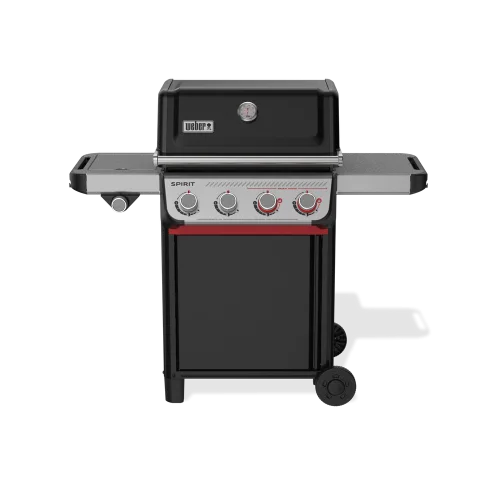
Best Overall
Weber Spirit E-435
- Fuel Type
- Propane or Natural Gas
- Cooking Area
- 428 sq. in.
- Output
- 35,000 BTU
- Rank 2
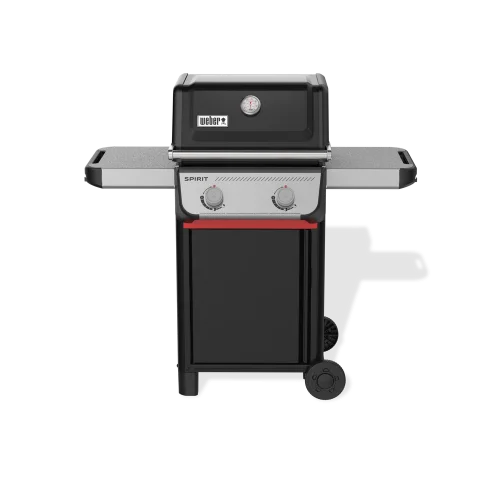
Best Budget (Under $500)
Weber Spirit E-210
- Fuel Type
- Liquid Propane
- Cooking Area
- 450 sq. in.
- Output
- 26,600 BTU
- Rank 3
Best Splurge / Smart
Weber Genesis EX-335
- Fuel Type
- Natural Gas or Propane
- Cooking Area
- 787 sq. in.
- Output
- 39,000 BTU
- Rank 4
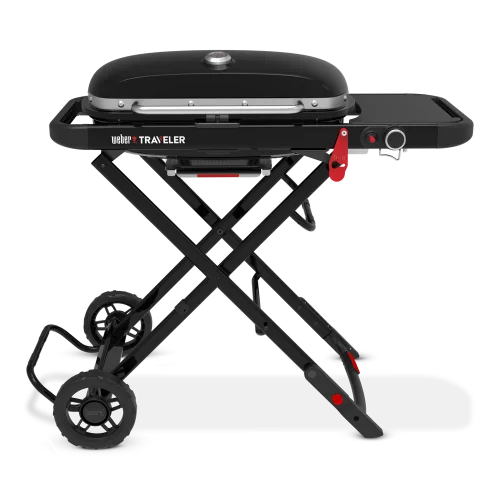
Best Portable
Weber Traveler
- Fuel Type
- Liquid Propane
- Cooking Area
- 320 sq. in.
- Output
- 13,000 BTU
- Rank 5
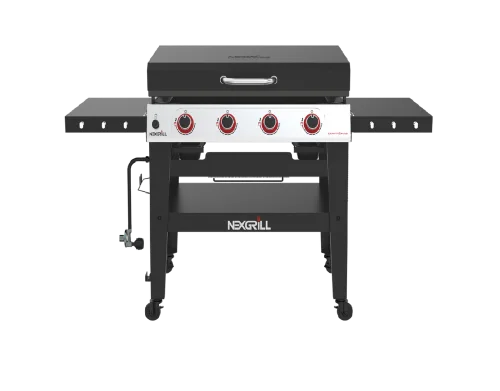
Best Flat-Top Griddle
Nexgrill Daytona 4-Burner
- Fuel Type
- Liquid Propane
- Cooking Area
- 756 sq. in.
- Output
- 60,000 BTU
1. Best Overall: Weber Spirit E-435
- Price: ~$779 — Check current price on Amazon
- Fuel: Liquid propane or natural gas
- Cooking Area: 428 sq. in.
- Output: 35,000 BTU (4 burners + side burner)
- Dimensions (Lid Closed): 46.2" H x 51.8" W x 26.6" D
The Verdict: The Weber Spirit E-435 strikes the ideal balance between mid-range pricing, intuitive temperature control, and rugged longevity, making it the best all-around gas grill for most households.
During long-term outdoor testing through rain and intense sun—both with and without a cover—the E-435 showed zero rust, dents, or structural wear. Its four main burners are operated by large, responsive dials that allow precise zone cooking, while the integrated side burner handles sauces and side dishes effortlessly.
Despite gas grills often lagging behind charcoal in flavor, the E-435’s high-heat boost mode produces an impressive, smoky char on burgers and vegetables.
Pros
- Ideal mid-size capacity for family dinners and small gatherings
- Responsive dial controls prevent overcooking
- Exceptional weather resistance and long-term durability
- Excels at low-and-slow indirect cooking
Cons
- Heat concentrates toward the center, cooking food slightly slower along the outer edges
- Grease trap can occasionally drip during heavy cooks
- Time-consuming initial assembly
2. Best Budget Gas Grill: Weber Spirit E-210
- Price: ~$449 — Check current price on Amazon
- Fuel: Liquid propane
- Cooking Area: 450 sq. in.
- Output: 26,600 BTU (2 burners)
- Dimensions (Lid Closed): 46.2" H x 48.3" W x 26.6" D
The Verdict: If you want a reliable, weatherproof gas grill under $500 without paying for oversized grates you won't use, the two-burner Weber Spirit E-210 is the clear standout.
As the compact sibling to the E-435, the E-210 retains Weber's signature porcelain-enameled Flavorizer Bars, which vaporize drippings for added flavor while dispersing heat evenly across the cooking grates. In our testing, it preheated rapidly and cooked chicken, burgers, and vegetables uniformly—though, like many compact two-burner units, it runs slightly hotter toward the back of the firebox.
Pros
- Best-in-class heat distribution under $500
- Compact footprint with foldable side tables for tight patios
- Fast preheating and straightforward cleanup
Cons
- Too small for large backyard parties
- No side burner or extra sear station
- Requires two people for smooth assembly
3. Best Splurge & Smart Grill: Weber Genesis EX-335
- Price: ~$1,479 — Check current price on Amazon
- Fuel: Natural gas (also available in liquid propane)
- Cooking Area: 787 sq. in.
- Output: 39,000 BTU (3 main burners + sear zone + side burner)
- Dimensions (Lid Closed): 48.1" H x 61.5" W x 27.0" D
The Verdict: Built for serious backyard entertainers, the Weber Genesis EX-335 pairs an expansive 787-square-inch cooking surface with a high-intensity sear station and integrated smart temperature monitoring.
Constructed with a heavy enameled cast-iron lid and riveted steel framing, the EX-335 is engineered as a long-term patio centerpiece. Its standout performance feature is the dedicated Sear Zone burner, which delivers an intense blast of radiant heat to lock in a steakhouse crust (tip: use it primarily as a finishing sear to avoid scorching thinner cuts). It also includes built-in digital probe thermometers and timers, though experienced grillers may still prefer an instant-read thermometer for exact internal steak temps.
Torn between the two Weber lines? See our Weber Spirit vs Genesis comparison.
Pros
- Massive cooking capacity for large crowds
- Dedicated high-heat Sear Zone creates deep grill marks and crust
- Side burner doubles as a prep table when closed
Cons
- Integrated smart probes can read a few degrees off target
- Heavy unit that takes roughly three hours to assemble
4. Best Portable Gas Grill: Weber Traveler
- Price: ~$449 — Check current price on Amazon
- Fuel: Liquid propane
- Cooking Area: 320 sq. in.
- Output: 13,000 BTU (1 burner)
- Dimensions (Open): 37.2" H x 43.6" W x 42.7" D
The Verdict: The Weber Traveler bridges the gap between tabletop camping grills and full-sized backyard units, folding flat into a rugged, wheeled cart that sets up in seconds.
Designed for tailgates, campsites, and apartment patios, the Traveler fits up to eight burgers at once on its cast-iron grates and includes a built-in lid thermometer and side prep table. Despite running on a single 13,000-BTU burner, its low-profile lid traps heat efficiently—just avoid packing the grates edge-to-edge if you want uniform charring across every burger.
Pros
- Sets up and collapses smoothly in under a minute
- All-metal grill basin offers superior heat retention over cheap portables
- Large all-terrain wheels roll easily over grass, gravel, and sand
Cons
- Single-burner design limits two-zone cooking
- Heavier and bulkier to lift into a packed trunk than tabletop models
5. Best Flat-Top Gas Grill: Nexgrill Daytona 4-Burner
- Price: ~$400 — Check current price on Amazon
- Fuel: Liquid propane
- Cooking Area: 756 sq. in.
- Output: 60,000 BTU (4 burners)
- Dimensions (Lid Closed): 41.2" H x 66.1" W x 29.6" D
The Verdict: If you want to cook smash burgers, fajitas, fried rice, and full breakfast spreads outdoors, the Nexgrill Daytona delivers a massive 756-square-inch cast-iron griddle surface at an unbeatable price.
Instead of open grates, the Daytona features a thick, solid cast-iron flat top powered by four burners totaling 60,000 BTUs. It heats remarkably evenly for a budget griddle, and cleanup is effortless thanks to a front-access grease management system—simply scrape residue into the drainage chute and empty the catch tray. While a flat top won't produce open-flame char marks, its edge-to-edge searing surface outperforms standard grates for delicate or finely chopped foods. Building a permanent outdoor kitchen? Read our Le Griddle Pro Series 75 review.
Pros
- Thick cast-iron griddle retains heat well and sears smash burgers evenly
- Front-access grease trap makes post-cook cleanup fast
- Includes dual side tables, electric ignition, and a built-in paper towel/butcher paper holder
- Backed by a 5-year warranty
Cons
- No open flame for traditional grill marks or char
- Hinged lid feels lighter than the heavy-duty cooktop
Gas Grill Buying Guide: What to Look For
Before investing in a new gas grill, evaluate these six core specifications to match the hardware to your cooking habits. To score any grill against these points, use our grill buying checklist.
- Size & Burner Count: For most families, a 3-burner grill with roughly 450 to 550 square inches of primary cooking space offers the best balance of versatility and fuel efficiency. Choose a 2-burner unit for balconies or 1–2 person households, and step up to 4+ burners only if you regularly host large gatherings.
- BTU Output (and Why It Isn't Everything): A BTU (British Thermal Unit) measures fuel consumption and heat generation—not peak grate temperature. Almost all well-insulated gas grills top out between 500°F and 550°F regardless of BTU rating. Aim for 8,000 to 12,000 BTUs per burner on full-sized grills, but prioritize heavy cast-iron or stainless-steel grates and a solid firebox over raw BTU numbers.
- Propane vs. Natural Gas: Liquid propane (LP) tanks offer portability and slightly higher heat output per cubic foot, making them the best choice for wheeled patio grills. Natural gas (NG) hooks directly into your home’s utility line so you never run out of fuel mid-cook, making it ideal for stationary grills and built-in outdoor kitchens.
- Firebox & Grate Materials: Look for cast-aluminum fireboxes and 304 stainless steel hoods to prevent rust-through. For grates, porcelain-enameled cast iron retains heat best for searing, while thick stainless steel rods require less maintenance.
- Wheels vs. Locking Casters: Swivel casters roll smoothly on poured concrete and composite decks. If you plan to wheel your grill across grass, pavers, or gravel, choose a model with two large, rugged wheels.
- Grease Management: Grease buildup causes dangerous flare-ups and corrodes internal components. Always choose a grill with a removable front- or side-access drip pan for easy maintenance.
How We Test Gas Grills
Every gas grill we recommend undergoes a standardized, real-world evaluation covering assembly, heat uniformity, and multi-zone cooking performance:
- Assembly & Build Audit: We time solo assembly out of the box, inspecting weld quality, lid weight, hardware alignment, and clarity of manufacturer instructions.
- Zucchini Heat-Mapping: We cover the entire primary cooking surface with uniform zucchini planks to visually map hot spots, cold zones, and heat distribution from front to back.
- High-Heat Steak Sear: We sear thick-cut steaks to evaluate grate heat retention, grill-mark definition, and internal doneness without overcooking the exterior.
- Max-Capacity Burger Test: We load the grates with burgers to measure true usable capacity and consistency across edge burners.
- Low-and-Slow Chicken: Using indirect two-zone heat, we slow-roast bone-in chicken legs to test temperature stability and flare-up resistance.
- Side Burner Boil Test: On equipped models, we simmer baked beans and sauces to verify low-flame control and wind resistance.
Frequently Asked Questions
Should I buy a propane or natural gas grill?
Buy a propane grill if you want to move your grill around your patio or don't have an exterior gas hookup. Buy a natural gas grill if your grill will stay in one permanent spot and you want endless fuel without refilling 20-pound tanks.
Is a gas grill or a charcoal grill better?
Gas grills are better for speed, convenience, and weeknight cooking, heating up in 10 minutes with precise dial control. Charcoal grills are better for high-heat searing and authentic wood-smoke flavor, though they require 20 to 30 minutes to light and more ash cleanup afterward. For charcoal and portable picks, see the best charcoal grills and our best outdoor grills, according to BBQ experts.
How many BTUs do I need for a good gas grill?
Look for 8,000 to 12,000 BTUs per main burner (roughly 25,000 to 40,000 total BTUs for a standard 3-burner grill). More importantly, check that the grill has a heavy lid and quality heat tents (flavorizer bars) to trap that heat effectively.
How do you clean a gas grill properly?
Clean your grates while the grill is hot—either right after preheating for 10 minutes or immediately after removing your food. High heat carbonizes stuck-on residue, allowing you to scrub the grates clean with a stainless-steel bristle or coil grill brush, followed by wiping the grates lightly with a high-smoke-point oil (like canola or avocado oil) to prevent rust. Our guide to the best grill brushes and cleaners covers the safest tools for each type of grate.
Which gas grill is the most eco-friendly?
A propane grill with a durable cast-aluminum firebox has a lower carbon footprint than charcoal grilling. Propane burns cleaner than both charcoal briquettes and natural gas, and a rust-proof aluminum body prevents the grill from ending up in a landfill after a few seasons.
We may earn a commission when you buy through links on this page, at no extra cost to you. How the site is paid for