Camping Gear
Camping Water Storage and Filters: What to Carry for Each Kind of Trip
Plan on at least one gallon of water per person per day when you camp, and more if you cook and wash up with it. Car campers can carry it all in a jug such as the Reliance Aqua-Tainer. Backpackers treat water as they go with a filter such as the Sawyer Squeeze. Overlanders carry it in tough cans such as the Scepter 5 gallon water can and add a purifier.
On this page10 sections
Water is the heaviest thing you bring, at a little over 8 pounds a gallon, and the one thing you cannot go without. It is also half of camp cooking: pasta, coffee, rice and washing up all need it. The right gear depends on a simple question. Are you bringing all your water with you, or collecting it along the way?
How much water should you bring camping?
The baseline from Ready.gov and the National Park Service is one gallon per person per day for drinking and basic sanitation. Double it in very hot weather. At a car campsite, where you also cook and wash dishes, many campers plan closer to two gallons per person per day.
A family of four on a two-night trip therefore needs 8 gallons at the least. If the campsite has a tap, a single 7 gallon jug that you refill is enough.
The best camping water gear at a glance
- Rank 1
Best Camp Water Jug
Reliance Aqua-Tainer 7 Gallon
- Camping style
- Car camping
- Capacity or flow
- 7 gallons, with spigot
- What it removes
- Storage only
- Rank 2
Best Group Filter
Platypus GravityWorks 4.0 L
- Camping style
- Car camping
- Capacity or flow
- 1.75 liters a minute
- What it removes
- Bacteria and protozoa
- Rank 3
Best Backpacking Filter
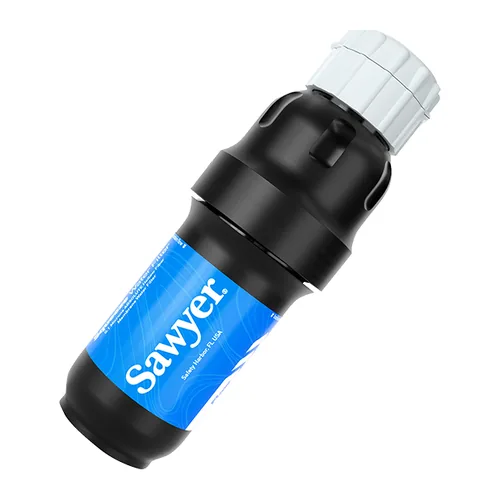
Sawyer Squeeze
- Camping style
- Backpacking
- Capacity or flow
- About 3 oz filter
- What it removes
- Bacteria and protozoa
- Rank 4
Best Backup Purifier
Katadyn Micropur MP1 Tablets
- Camping style
- Backpacking
- Capacity or flow
- 1 tablet per liter
- What it removes
- Bacteria, viruses and cysts
- Rank 5
Best Overland Water Can
Scepter 5 Gallon Military Water Can
- Camping style
- Overlanding
- Capacity or flow
- 5 gallons
- What it removes
- Storage only
- Rank 6
Best Purifier
MSR Guardian Purifier
- Camping style
- Overlanding
- Capacity or flow
- 2.5 liters a minute
- What it removes
- Viruses, bacteria and protozoa
See every spec in one table6 rows
| Category | Model | Camping style | Capacity or flow | What it removes | Approx. Price | Check Price |
|---|---|---|---|---|---|---|
| Best Camp Water Jug | Reliance Aqua-Tainer 7 Gallon | Car camping | 7 gallons, with spigot | Storage only | ~$25 | View on Amazon |
| Best Group Filter | Platypus GravityWorks 4.0 L | Car camping | 1.75 liters a minute | Bacteria and protozoa | ~$135 | View on Amazon |
| Best Backpacking Filter | Sawyer Squeeze | Backpacking | About 3 oz filter | Bacteria and protozoa | ~$46 | View on Amazon |
| Best Backup Purifier | Katadyn Micropur MP1 Tablets | Backpacking | 1 tablet per liter | Bacteria, viruses and cysts | ~$18 | View on Amazon |
| Best Overland Water Can | Scepter 5 Gallon Military Water Can | Overlanding | 5 gallons | Storage only | ~$59 | View on Amazon |
| Best Purifier | MSR Guardian Purifier | Overlanding | 2.5 liters a minute | Viruses, bacteria and protozoa | ~$400 | View on Amazon |
1. Reliance Aqua-Tainer 7 Gallon: best camp water jug
- Capacity: 7 gallons (26 liters)
- Empty weight: about 2 pounds
- Size: roughly 11 by 11 by 15 inches
- Dispensing: spigot that stores inside the cap
The Aqua-Tainer is the square blue jug you see on picnic tables at every campground. Set it on the end of the table with the spigot over the edge and you have running water for drinking, cooking and washing hands. Its cube shape stacks and does not roll around the trunk.
The catch: it weighs about 58 pounds full, so fill it near where it will sit. The spigot is the weak point: do not over-tighten it, and carry the jug upright.
The Verdict: Buy the Reliance Aqua-Tainer if you camp by car and want an inexpensive jug with a tap.
2. Platypus GravityWorks 4.0 L: best group filter
- Capacity: 4 liter dirty-water bag and 4 liter clean-water bag
- Flow: 1.75 liters a minute
- Filter: 0.2 micron hollow fiber, good for about 1,500 liters
- Weight: 11.5 ounces
- Removes: bacteria and protozoa
Fill the dirty bag at a lake or stream, hang it from a branch and let gravity do the work. Four liters filter in a few minutes while you set up the stove, with no pumping or squeezing. That makes it the best choice for a group at a site with no tap.
The catch: it does not remove viruses or improve the taste, and like all hollow-fiber filters it must not freeze. Stock comes and goes.
The Verdict: Buy the Platypus GravityWorks if you filter water for three or more people.
3. Sawyer Squeeze: best backpacking filter
- Filter: 0.1 micron hollow fiber
- Weight: about 3 ounces for the filter
- Removes: bacteria and protozoa, including Giardia and Cryptosporidium
- Life: no fixed end of life if you backwash it
- Fits: the included pouches and standard water bottle threads
The Squeeze screws onto a pouch or a standard plastic bottle. Fill the bottle with stream water, screw the filter on and drink, or squeeze clean water into a pot for dinner. It weighs about as much as a deck of cards and lasts for years.
The catch: it does not remove viruses. The flow slows unless you backwash it with the syringe, and a filter that has frozen has to be replaced.
The Verdict: Buy the Sawyer Squeeze if you hike to camp and collect water on the way.
4. Katadyn Micropur MP1 Tablets: best backup purifier
- Active ingredient: chlorine dioxide
- Dose: one tablet per liter
- Kills: bacteria, viruses and cysts, including Cryptosporidium
- Pack weight: about 1 ounce for 30 tablets
- Shelf life: 4 years while sealed
Filters clog, crack and freeze. A strip of these tablets weighs almost nothing and covers you when that happens. They also kill viruses, which filters such as the Squeeze do not, so the two together make a complete treatment.
The catch: full treatment takes up to 4 hours, and the tablets are meant for clear water. Pre-filter cloudy water through a cloth first.
The Verdict: Buy Katadyn Micropur MP1 tablets as the backup in every first-aid kit.
5. Scepter 5 Gallon Military Water Can: best overland water can
- Capacity: 5 gallons (20 liters)
- Empty weight: about 4.3 pounds
- Size: about 18.8 by 13.7 by 6.8 inches
- Material: food-grade, BPA-free polyethylene
This is the jerry-can shape that fits standard can holders on racks and bumpers. The thick walls shrug off being strapped down and bounced along washboard roads for days, which is where thin camp jugs split.
The catch: it costs about three times as much as a camp jug and has no spigot, so pouring means tipping a 46 pound can unless you add a spout. Scepter also sells a lighter, cheaper "military-style" consumer can. Check which one a listing shows.
The Verdict: Buy the Scepter water can if your water rides outside the vehicle or on rough tracks.
6. MSR Guardian Purifier: best purifier
- Filter: 0.02 micron hollow fiber
- Removes: viruses, bacteria and protozoa
- Flow: up to 2.5 liters a minute
- Cartridge life: more than 10,000 liters
- Weight: about 17 to 20 ounces
The Guardian is a pump purifier fine enough to remove viruses without chemicals or waiting. It cleans itself on every stroke, so it keeps working in silty water that would clog other filters. That matters when you refill from whatever source the route offers.
The catch: it costs about $400 and weighs more than a pound. For most trips in North America, a filter and backup tablets are enough.
The Verdict: Buy the MSR Guardian if you travel where the water may carry viruses or where you cannot be choosy about the source.
What is the difference between a water filter and a purifier?
A filter removes bacteria and protozoa such as Giardia and Cryptosporidium. A purifier also deals with viruses, either with a much finer filter or with chemicals. In most North American backcountry a filter is enough. Use a purifier, or add tablets, where human or livestock waste may reach the water.
Water is one of six essentials. See the rest in camping gear essentials, and plan the meals that use it in camp kitchen essentials.
Frequently Asked Questions
How much water do I need per day when camping?
At least one gallon per person per day for drinking and basic hygiene, and more in hot weather. For car camping with cooking and dish washing, plan on about two gallons per person per day.
Do I need a water filter for car camping?
Not if the campground has drinking water or you bring all your own. Carry purification tablets as a backup in case a tap is shut off or you run short.
Can you drink stream water if you boil it?
Yes. A rolling boil for one minute, or three minutes at high altitude, kills bacteria, viruses and protozoa. Boiling uses stove fuel and time, which is why most hikers carry a filter instead.
How do you keep a water filter from freezing?
On cold nights, shake out the water and keep the filter in a sealed bag inside your sleeping bag. If a hollow-fiber filter does freeze, replace it, because the fibers can crack without any visible damage.
We may earn a commission when you buy through links on this page, at no extra cost to you. How the site is paid for