Home / Blog / Buying Guides
Buying Guides
How to Choose a Portable Charcoal Grill
Choose a portable charcoal grill by four things: a shape that fits your car, vents in both the lid and the base, a safe way to carry ash, and a grate sized for the people you feed. The Weber Jumbo Joe 18-Inch is the best choice for groups, the Weber Go-Anywhere is the easiest to pack, and the Cuisinart 14-Inch Portable Charcoal Grill is the lightest and cheapest.
On this page7 sections
A portable charcoal grill gives you a hard sear and charcoal flavor anywhere there is a flat, fireproof surface. It needs no gas cylinder and no electricity. Unlike a full-size kettle, it is designed around three limits: the space in a trunk, holding heat in a small body, and getting rid of ash safely. Knowing how those limits shape a grill keeps you from buying a tabletop unit that warps after two cookouts.
Three portable charcoal grills to start with
- Rank 1
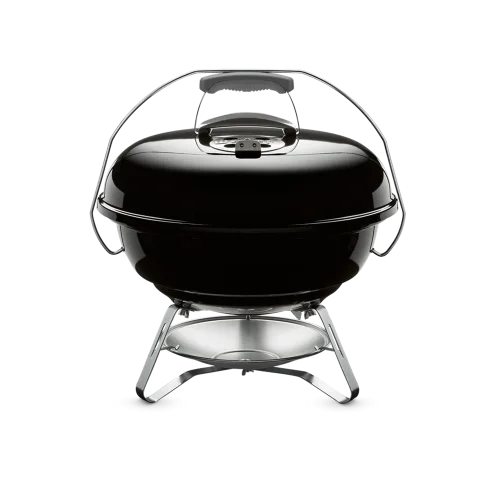
Best for Groups
Weber Jumbo Joe 18-Inch
- Cooking area
- 240 sq in
- Shape
- Round kettle
- Lid lock
- Wire lock that also holds the lid
- Rank 2
Easiest to Pack
Weber Go-Anywhere Charcoal Grill
- Cooking area
- 160 sq in
- Shape
- Rectangular box
- Lid lock
- Legs fold over the lid
- Rank 3
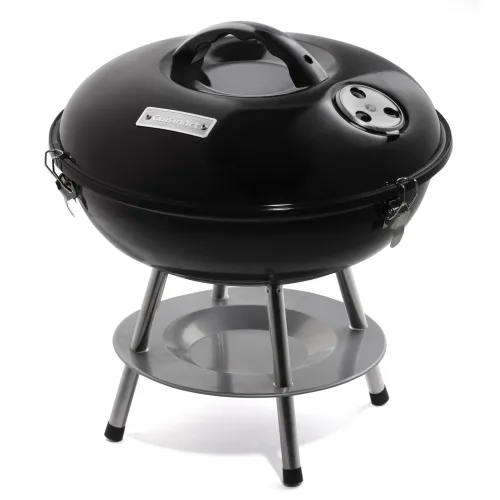
Lightest and Cheapest
Cuisinart 14-Inch Portable Charcoal Grill
- Cooking area
- 150 sq in
- Shape
- Small round kettle
- Lid lock
- Three lid clips
See every spec in one table3 rows
| Category | Model | Cooking area | Shape | Lid lock | Check Price |
|---|---|---|---|---|---|
| Best for Groups | Weber Jumbo Joe 18-Inch | 240 sq in | Round kettle | Wire lock that also holds the lid | View on Amazon |
| Easiest to Pack | Weber Go-Anywhere Charcoal Grill | 160 sq in | Rectangular box | Legs fold over the lid | View on Amazon |
| Lightest and Cheapest | Cuisinart 14-Inch Portable Charcoal Grill | 150 sq in | Small round kettle | Three lid clips | View on Amazon |
These three are the ones the rest of this guide uses as examples. For a ranked list that also covers the Everdure CUBE, see the best portable charcoal grills.
What should you check before buying a portable charcoal grill?
1. Does the shape fit your car?
A rectangular grill packs flat against a cooler. A round kettle wastes the corners of a trunk, but it moves air more evenly around the food and usually gives you a larger grate. Measure the space you have before you choose between them.
2. Does it have vents in the lid and the base?
Do not buy a charcoal grill without both. The lower vents feed air to the coals and the lid vents let it out. Together they set the temperature. Closing both starves the fire, which is the safe way to put it out and saves unburned charcoal for the next cook.
3. Where does the ash go?
At a campsite or a park you cannot tip hot ash on the ground. Look for an ash catcher under the bowl, or a lid that locks so you can smother the coals and carry the cold ash to a metal bin.
4. What will it sit on?
A tabletop charcoal grill sends strong heat downward. Put it on concrete, bare dirt or a fireproof grill mat. Do not put it on a plastic folding table or on dry grass.
5. How many people do you cook for?
Allow about 30 square inches of grate for each burger. A 150 square inch grill cooks for two to four people at a time, and a 240 square inch grill cooks for four to six.
1. Weber Jumbo Joe 18-Inch: best for groups and indirect cooking
- Cooking area: 240 square inches, about eight burgers
- Body: porcelain-enameled steel bowl and lid
- Vents: aluminum dampers in the lid and the bowl
- Carrying: Tuck-N-Carry lid lock that doubles as a lid holder
Most portable charcoal grills make you cook in small batches. The Jumbo Joe sits between a tabletop travel grill and a full-size backyard kettle, and it feeds four to six people in one round.
It cooks like a smaller Weber Original Kettle Premium 22-Inch. The deep bowl leaves room to roast a spatchcocked chicken or to cook ribs over indirect heat, and the wide grate lets you move burgers away from a flare-up. The grate sits a little closer to the coals than on the 22-inch kettle, so it reaches searing heat quickly on less charcoal.
Pros
- 240 square inches of cooking space
- Lid lock keeps the lid off the ground while you turn food
- Durable porcelain-enamel finish
Cons
- The round body takes more cargo room than a rectangular grill
- An open ash plate, not an enclosed bucket
The Verdict: Buy the Weber Jumbo Joe 18-Inch if you tailgate or camp with a family and do not want to give up kettle cooking.
2. Weber Go-Anywhere Charcoal Grill: easiest to pack
- Cooking area: 160 square inches, about six burgers
- Body: porcelain-enameled steel lid and base with a plated steel grate
- Vents: two dampers in the lid and two vents in the sides
- Carrying: the legs fold up and lock the lid shut
When the trunk is already full of coolers, chairs and camping gear, a round kettle wastes corner space. The Go-Anywhere is a rectangular box that slides in beside a cooler. Its steel legs swing up to lock the lid during the drive, which keeps the grates and any leftover ash inside.
The rectangular firebox is well suited to two-zone grilling. Bank the briquettes or lump charcoal on one half and leave the other half empty. You can then sear steaks over the coals and finish thick chicken breasts or sausages gently on the cool side. Many campers store a small bag of charcoal, fire starters and tongs inside the firebox on the way out.
Pros
- Rectangular shape makes the most of trunk space
- Porcelain-enameled steel resists rust
- Good airflow control for indirect cooking
Cons
- No removable ash pan: tip the cold bowl into a metal bin
- Sits close to the table, so use a heatproof mat on a plastic picnic table
The Verdict: Buy the Weber Go-Anywhere if you camp, take road trips or live in an apartment and want real charcoal control in a box-shaped grill.
3. Cuisinart 14-Inch Portable Charcoal Grill: lightest and cheapest
- Cooking area: 150 square inches on a chrome-plated grate
- Weight: about 4 pounds, by Cuisinart's figure
- Vents: a damper in the lid and a vent in the base
- Carrying: three lid locks and an ash catcher under the bowl
When weight and price matter most, the Cuisinart is hard to beat. It is light enough to carry in one hand from a parking lot to a beach or a picnic table, and it includes travel features that many budget grills leave out.
The grate suits two to four people: four burgers, or a couple of ribeyes and some corn. The two vents give you working control of the fire, and the ash catcher stops embers from blowing onto grass or a wooden table. Three locks hold the lid on during the drive.
Pros
- Very light and inexpensive
- Ash catcher under the bowl
- Three lid locks stop it rattling in the car
Cons
- Thinner steel loses heat faster than a Weber bowl in cold wind
- A 14-inch grate leaves little room for a cool zone
The Verdict: Buy the Cuisinart 14-Inch Portable Charcoal Grill if you travel alone or as a couple and want a grab-and-go charcoal grill at the lowest price.
How do you set up a portable charcoal grill safely?
- Put the grill on a level, fireproof surface, clear of tents, awnings and dry grass.
- Light the charcoal in a small chimney starter, or over natural fire starters. Skip lighter fluid.
- Wait until the coals are lightly coated in ash, then spread them, or bank them to one side for two-zone cooking.
- When you finish, close the lid and every vent to put the fire out.
- Leave the grill until the bowl is cool to the touch. Put the cold ash in a metal bin, not in a plastic bag or on the ground.
Not sure charcoal is right for your trips? Propane lights faster and is allowed during more fire restrictions. Read portable charcoal vs propane, or see the best portable propane grills and the best portable grills for camping.
Frequently Asked Questions
How long does a portable charcoal grill take to cool down?
Usually 45 to 90 minutes after you close the lid and all the vents. Shutting the vents cuts off the air, which puts the coals out faster and saves unburned briquettes for next time. Do not load a charcoal grill into a vehicle until the bowl is cool to the touch.
Can you use lump charcoal in a portable charcoal grill?
Yes. Lump charcoal lights faster, burns hotter and leaves less ash, which suits quick searing on a short trip. Briquettes burn longer and more steadily, which suits thick cuts and slower indirect cooking.
How much charcoal does a portable grill need?
Most 14 to 18 inch portable grills need only 15 to 30 briquettes, about half a standard chimney starter. Overfilling a small firebox chokes the airflow and puts the coals too close to the grate, which burns the outside of the food before the middle is cooked.
Are portable charcoal grills allowed at campsites?
Most campgrounds allow them, provided the grill is on a fireproof surface and the ash goes in the bins provided. During drought and fire restrictions, many parks ban charcoal grills while still allowing propane grills that have a shutoff valve. Check the rules for the park before you pack.
We may earn a commission when you buy through links on this page, at no extra cost to you. How the site is paid for